
Project Advocates ease the paperwork

Department of Buildings Project Advocate Program

Every borough has at least one Project Advocate that can provide a single point of contact for building owners, developers, architects, and engineers. They assist when resolving technical or operational issues on a given property or a specific project. Project advocates serve as a liaison between the Department of Buildings and/or other city agencies. They also connect with design applicants, property and business owners, and the general public. 

The following is a list of a few ways a Project Advocate can help you: 

  • Assist with coordinating large or complex project submission requirements
  • Assist with violation correction and resolution
  • Facilitate interagency and internal coordination
  • Assist registered design professionals and project managers in all project phases
  • Assist property owners and managers with DOB inspections and sign-offs
  • Assist with obtaining a certificate of occupancy. 
  • Engage with property owners, developers or authorized representatives in understanding the NYC building code and zoning regulations 

Project Advocates are key to the Certificate of Occupancy (C of O) open applications program.  They review requests submitted by the design applicant. These requests should detail the problems or issues which are hindering the issuance of the final C of O. The Project Advocate in the borough where the project is located will consult with the necessary technical and/or inspection units. They will then recommend a disposition to the Borough Commissioner. 

If you are having trouble obtaining plan approval, a certificate of occupancy, or just want to know if your project is feasible, reach out to us. By contacting S & M Expediting, we can make this happen, including meeting with a Project Advocate. 
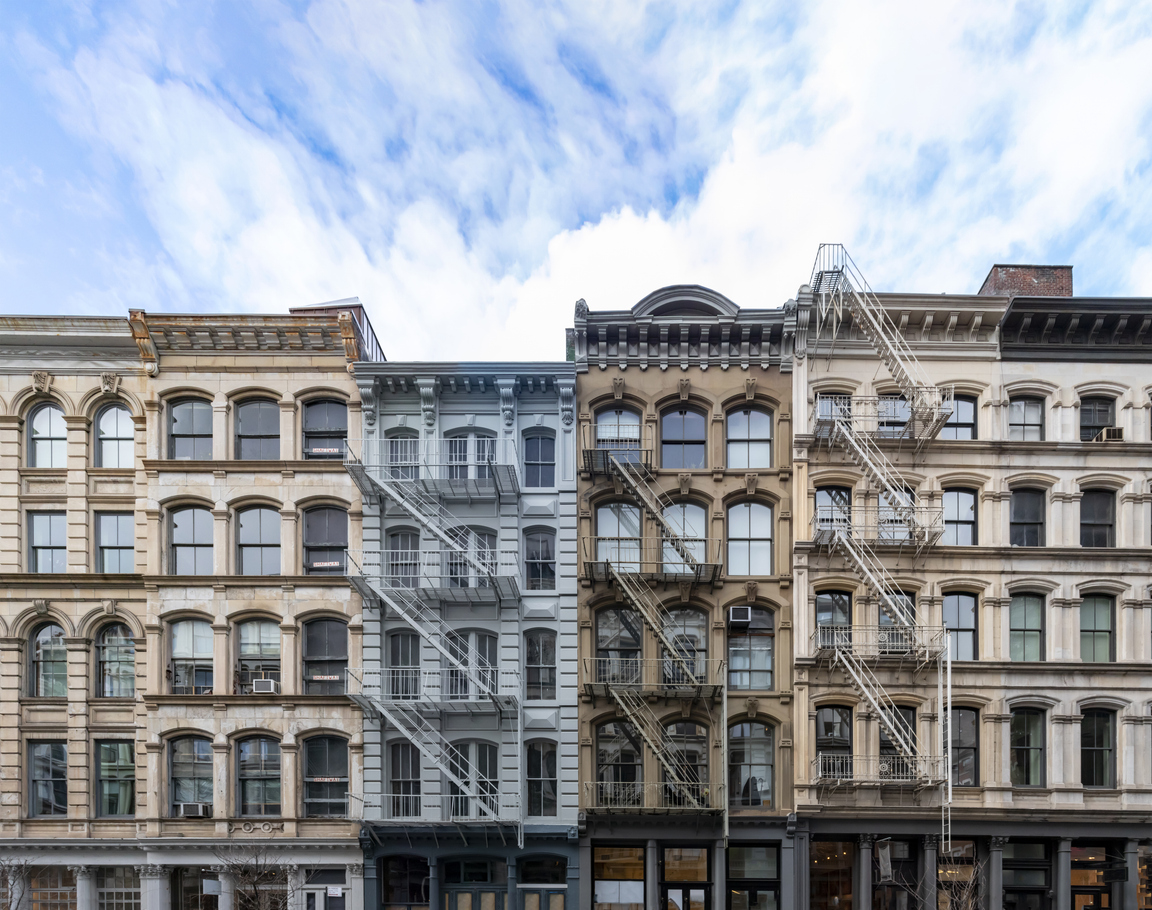
Exterior view of old apartment buildings in the SoHo neighborhood of Manhattan in New York City

NYC FAÇADES

In New York City, owners of buildings with six or more stories must have the exterior walls (façade) inspected every five years by a qualified exterior wall inspector (QEWI). This is required by NYC rules and regulations pertaining to façades under the Façade Safety Inspection Program (FISP). Deadlines for façade reports are divided into cycles. The Dept. Of Buildings added sub-cycles to make it easier for building owners to hire the necessary professionals. The last digit of a building’s block number determines what sub-cycle a property falls under.

Qualified exterior wall inspector

The QEWI must file an acceptable technical report with the Department of Buildings during the appropriate cycle. If the initial technical report shows findings of unsafe conditions, an amended report must be submitted. 

Façade conditions on the technical reports are classified as either Safe, Safe with a repair and maintenance program (SWARMP), or Unsafe.

Of course, the best classification to receive is Safe. If the inspector’s findings trigger a SWARMP classification, repairs or maintenance must be done on the area within five years. This prevents an unsafe condition by the next cycle.

Unsafe findings during a façade inspection require that repairs be made within one year of the critical findings. The QEWI must indicate on the technical report if the property owner must provide protective measures for the public. Such measures include a fence, sidewalk shed, or protective netting. The location of such protection should be specified. Unsafe conditions must be corrected within 90 days of filing a report with an Unsafe status. An amended report must then be filed within two weeks of completing the work.

Property owners who fail to have their façades inspected in a timely manner are subject to penalties. There is also the possibility of having OATH summonses issued. 

S & M Expediting can assist with recommendations for a QEWI if you need to have your façade inspected.

Basement Apartment

ANCILLARY DWELLING UNITS (ADUs)

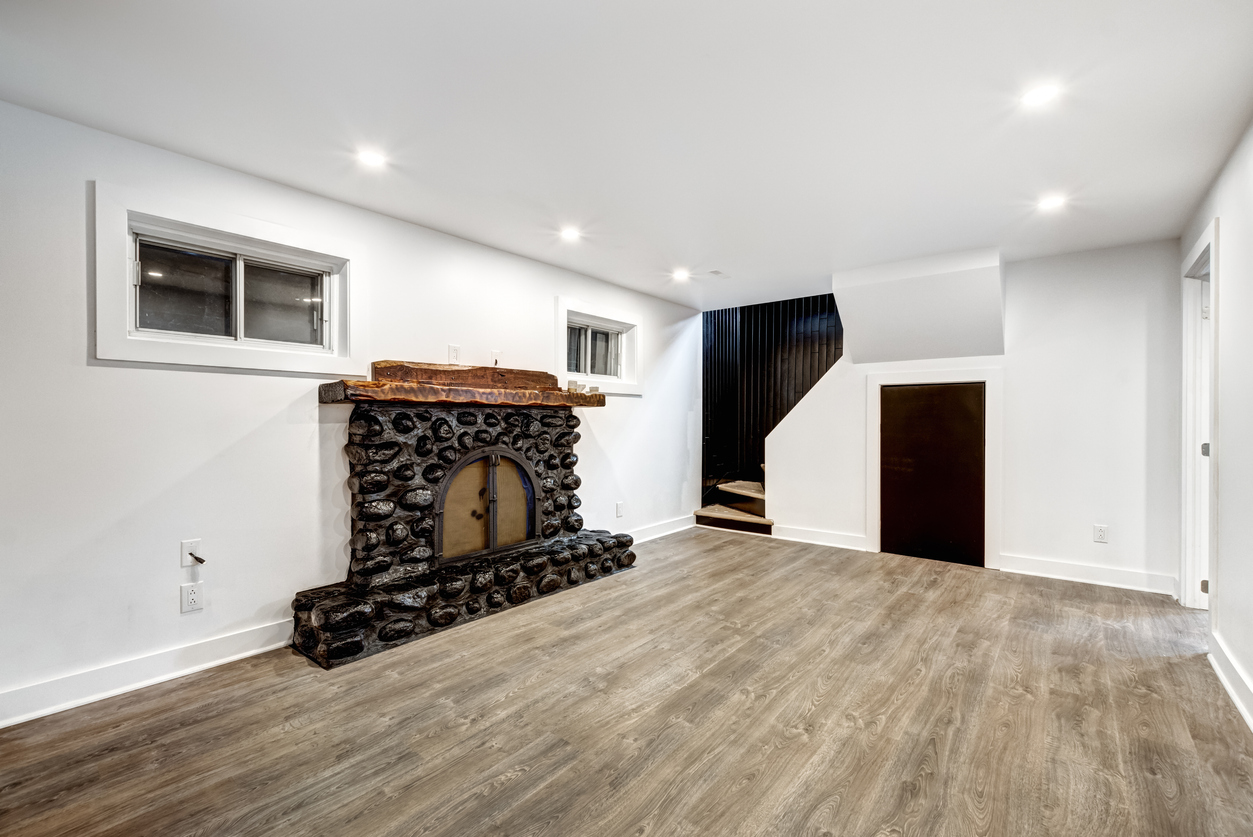
In December 2024, NYC passed the City of YES for Housing Opportunity with the aim to create approximately 80,000 new homes throughout the city. One of the key goals is to create smaller accessory units. Like backyard cottages and legalizing cellar and basement apartments, also known as Ancillary Dwelling Units (ADU’s). 

City of Yes will allow ADUs in one and two family homes in all low density (R1-R-5) zoning districts. Certain areas prohibit certain types of ADUs such as if you are in a flood zone. 

Some general requirements for ADUS are

  • Only one ADU per each 1- or 2- family residence with a maximum size of 800 sf.
  • The homeowner must reside on the zoning lot with the ADU
  • ADUs require a separate entrance
  • Creation of the ADU must not affect the light and air requirements of the primary dwelling.
  • Subject to the Multiple Dwelling Law (MDL), two-family building adding an attic, basement, cellar, or attached ADU will be treated as a three-family building. There is an exception to units separated by a fire wall
  • A two-family building with a pre-existing basement or cellar unit undergoing the legalization process will be subject to Building Code Appendix U and additional fire and safety rules and regulations in lieu of the MDL.  

Exceptions/Restrictions

Backyard ADUs are not permitted in:

  • Historic Districts
  • R1-2A, R2A and R3A districts outside of the Greater Transit Zone
  • Special Bay Ridge District west of Ridge Boulevard or south of Marine Avenue

Conversions of existing garages to an ADU are not backyard ADUs according to the Zoning Resolution Sect. 12-10 .

Subgrade ADUs are not permitted in high-risk flood areas 

LL126/24  are the laws that control subgrade dwelling legalization. Subgrade dwellings are restricted to existing one- and two-family buildings in the program area. The program area includes:

Community Districts :

  • 9, 10, 11, and 12 in the Bronx, 
  • 4, 10, 11, and 17 in Brooklyn, 
  • 2, 3, 9, 10, 11, and 12 in Manhattan 
  • And district 2, in Queens.

More information will be available as the city planning commission updates the Zoning Texts.  For questions about ADUs, reach out to S & M Expediting

Stop Work Order

STOP WORK ORDER

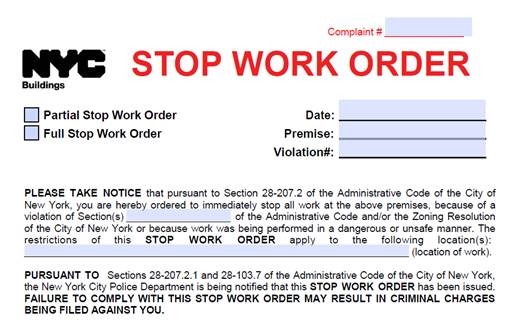
Construction work in New York City must adhere to the Administrative Code or the Zoning Resolution.  If at any point, during the course of construction,  an inspector from the Department of Buildings (DOB) determines that a job site is unsafe, said inspector will issue a Stop Work Order (SWO). 

There are two types of Stop Work Orders that the DOB will issue:  

A full SWO prohibits all work at the site, excluding any work that is needed to make the job site safe. An  SWO can be issued if an inspector is denied access to a site. Furthermore, it can be issued if the proper permits are not in place.

A partial SWO or PSWO prohibits work at a certain area or certain types of work. A PSWO can be issued if work is contrary to approved plans. It can also be issued if the site safety plan or log is missing. 

If the DOB issues a SWO for work without a permit, a permit must be issued. In addition, any associated civil penalties must be paid before work can resume. 

If the DOB comes back to the site and witnesses work going on despite having a SWO, additional violations with hefty penalties may be issued. The first offense for working against a STOP WORK ORDER carries a penalty of $6000 currently.  Subsequent offenses are $12K each. 

To Lift a SWO, you must: 

  • Correct all violating conditions cited in the SWO
  • Provide proof that any associated OATH violations have been resolved
  • Provide proof that all applicable civil penalties have been paid
  • Pass inspection from the unit of the DOB that issued the SWO. Sometimes it will take multiple re-inspection attempts before the SWO is lifted.  

If you have any questions about SWOs or need assistance having one lifted, give S&M Expediting a call. 

Certificate of Opertion

NYC Place of Assembly Permit

What is a Place of Assembly Certificate of Operation and when is one needed?

A NYC Place of Assembly Permit (PA) is a space that allows large groups of people to assemble at a given time for any activity. 

If 75 persons or more are gathered indoors or 200 persons or more are gathered outdoors, a Place of Assembly Certificate of Compliance is needed. 

Assembly places are found in restaurants, theaters, sporting arenas, schools, churches, and auditoriums but can be found in other places as well.

What you need to know.

When applying for a PA, the registered design professional (RDP) is hired to generate the plans. These plans will be filed at the Dept. of Buildings. Those plans will need to address safety issues such as the number of exits and occupant loads. Moreover, handicap accessibility must be provided for PA spaces. The RDP will determine if a sprinkler and/or fire alarm system will be required. Also, seating and furniture arrangement will be shown on the plans. Plans will further show the required travel distances to the exits.

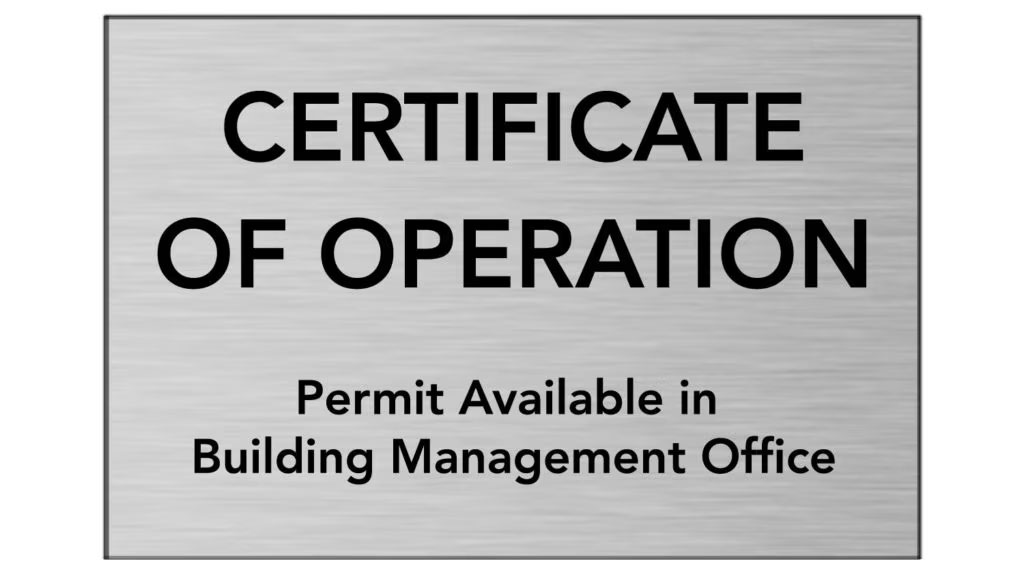
Before the PA space can be legally occupied, the required number capacity sign must be posted. The Certificate of Operation must also be displayed in a conspicuous location within the space. The capacity sign indicates the number of persons that can legally occupy the space.  Approved PA plans must be kept on site for the annual inspection performed by the Fire Department. 

The Department of Buildings issues the Certificate of Operation.   A year after this has been issued, the Fire Dept. will issue a Place of Assembly permit. This will be renewed by the FDNY annually based on the inspection they perform. 

If any of the following changes, an amendment filed at the DOB will be required: 

  • change in establishment name
  • change in seating plan
  • change in use or assembly group. 

Let S & M Expediting help you when planning your place of assembly space.