NYC Building Permit

WORK WITHOUT PERMIT VIOLATIONS

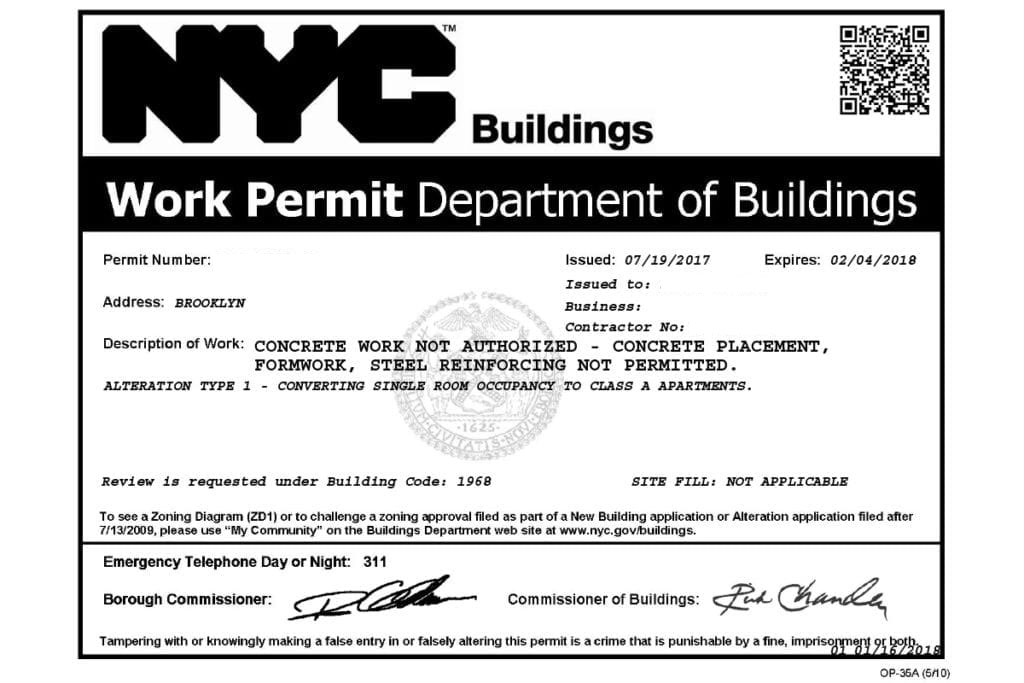
A Department of Buildings (DOB) inspector shows up at your home or place of business and issues a work without a permit violation.  What is your next step?  The first step is to reach out to a reputable permit expediting company like S & M Expediting. They will help assemble the right team you will need to get you out of this jam. 

Work without permits violations are common and unfortunately, costly violations to resolve. If left unresolved, these violations can lead to heavier fines. They can also trigger enforcement actions depending on the severity of the violating condition. 

Clearing a violation for work without a permit

How does one clear a violation for work without a permit?  You do this by taking the necessary steps to obtain a permit.  In some cases, you will have to hire a registered architect (RA) or professional engineer (PE). Their job is to prepare plans to be filed with the DOB.  Once approved, the required civil penalty must be paid. This must happen before the contractor can obtain a permit.  If the violation was for plumbing or electrical work done without a permit, hire a plumber or electrician to obtain a permit. Plans are not required in this case.  Required civil penalty will have to be paid before the permit is issued. 

Civil penalty paid to the DOB is based on the filing fee paid when the job is filed.  Since 2018, the penalty for work without a permit for a one-or two family house is six times the filing fee. The minimum civil penalty is $600.  For all other buildings, the civil penalty is twenty-one times the filing fee.  The minimum penalty is $6000. Meanwhile, the maximum is $15,000. 

You may think that once the civil penalty is paid, the violation is closed out. However, you would be wrong.  If the violation issued was an OATH violation, you’d have to appear at a hearing. In order for the violation to be resolved, you also need to file a Certificate of Correction.  If you are issued a regular DOB violation with no hearing date, an inspection by a DOB inspector is required. This is necessary to have the violation dismissed. 

Reach out to S &M Expediting if you have been issued a violation for work without a permit.  We will help you clear your violation. 
NYC OATH Summons

Oath Summons

It’s never a good day when you reach your home or place of business and you find an Oath Summons on your door.  It can be quite stressful dealing with an Oath Summons.

OATH, or NYC Office of Administrative Trial and Hearings, was formerly known as the Environmental Control Board (ECB). It is the agency that handles hearings for summonses issued by various city agencies. For instance, the Dept. of Buildings, FDNY, and Dept. of Transportation issue summonses like the Oath Summons. 

As upsetting as it is to receive a summons or violation, the best thing is to find the right team to help you resolve this Oath Summons issue.  The worst thing to do is ignore it and pretend you never received it. If you do ignore it, you may be issued multiple summonses or violations for Failure to Comply. Furthermore, you can be issued a Stop Work Order. This can shut down a project until all fines and violation conditions have been rectified. 

Dept. of Buildings summonses for work without a permit are among the costliest you can receive.  Not only will you need to hire a licensed professional to help you obtain a permit. You will also have to pay a civil penalty to the Dept. of Buildings. This penalty can run you between $600 and $10,000 for one-and-two family homes. Things differ for all other buildings, where it can range from $6000 to $15,000. Moreover, you will have to pay a fine to Dept. of Finance.  The fine due to the Dept. of Finance is found on the summons. This often accompanies the Oath Summons. 

S & M Expediting provides expert OATH representation. We work with our clients to mitigate fines where possible.  Give us a call to find out how we can help with your summons from Oath. 

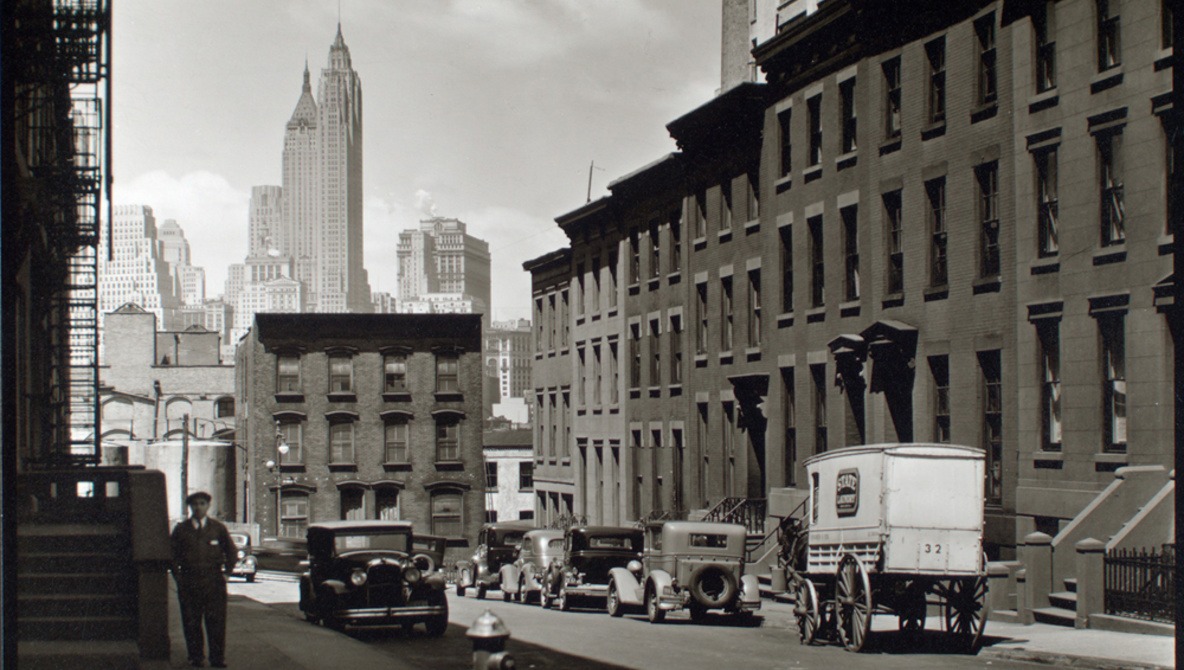
Old photograph of New York City

Letter of No Objection in NYC updated 2025

In the City of New York, in order for a building to be legally occupied, the building must first have a Certificate of Occupancy (CO). The CO must state a building’s legal use and type of permitted occupancy. New buildings must have a CO.   Older, pre-existing buildings may not have a CO if built prior to 1938. For those buildings, owners may file for a Letter of No Objection or Verification letter. This is issued by the Dept. Of Buildings to establish legal use of the building or a particular space in the building.

Why would I need an LNO?

If you are selling a property that pre-dates the CO requirement, the potential buyer or bank will ask for one as proof of current use.  If you are opening a business in a building without a CO, and your business requires a license from another governmental agency, you will have to file for an LNO.

A Letter of No Objection (LNO)

An LNO is fairly easy to obtain and on average takes approximately 3-4 weeks. A LNO is issued when the proposed and actual use of the space/building in question are the same use group and occupancy group. This is as dictated by the city zoning regulations and building code. When the usage group or occupancy group changes, a new certificate of occupancy must be applied for.

Some of the  agencies or entities interested in Letters of No Objections are the New York State Liquor Authority, banks, mortgage companies, the Fire Dept.  and the Dept. of Consumer and Worker Protection.  The Fire Department will require an LNO for a property without a certificate of occupancy. This is necessary when applying for approval of Fire Alarm or Fire Suppression/Rangehood filings. 

What is required to acquire a LNO? 

There are several requirements to receive an LNO. These requirements include, but are not limited to the following:

For buildings with a Certificate of Occupancy

  1. Copy of most recent CO
  2. Copy of Property Profile
  3. Job filings establishing use or occupancy that LNO is needed for
  4. Payment of filing fee

When the property does not have a Certificate of Occupancy

  1. Copy of Property Profile and list of Job filings
  2. Block & Lot Folder Plans
  3. Recent Survey
  4. Sanborn or Belcher-Hyde Map
  5. Photos
  6. Payment of filing fee
  1. Copy of most recent CO
  2. Copy of Property Profile and list of Job filings
  3. Block & Lot Folder Plans
  4. Hours/Dates of Operation, number of children (over and under the age of 2)
  5. Layout Drawing with exits, accessory locations, etc.
  6. Payment of filing fee

Reasons why the Department of Buildings will not issue an LNO

  1. Property has open applications
  2. When there are any unresolved violations on the property
  3. City agencies have conflicting information regarding building’s usage
  4. Insufficient proof of usage has been submitted. 

Need help applying for Certificates of Occupancy (COs), TCOs, and Letters of No Objection? Call us today at 718-833-2333.

NYC Building Permit

How To Get A Construction Permit In NYC

We often get calls from homeowners or contractors. These callers are either new to the business or new to construction work in NYC. They usually ask what is required to get a construction permit for their work. My first question to them is: “What work are you planning to do?” Once they tell me the proposed scope of work, I outline the requirements for a construction permit. For most work in NYC, you are required to submit plans. These plans must be prepared by a New York State licensed design professional (LDR), such as an architect or an engineer. The plans are then submitted to the Department of Buildings for approval.

Bear in mind that approvals from other agencies may be required. This depends on where the property is located. Other agencies that can be involved in a project include Dept. of Transportation (DOT), Landmarks Preservation Commission (LPC), Dept. of Environmental Protection (DEP) and Housing Preservation and Development (HPD) to name a few.

Some minor work does not require a permit. For work that can be done without a permit click on the link below:

https://www.nyc.gov/assets/buildings/rules/1_RCNY_101-14.pdf

Once the plans are approved, the contractor who will do the work will hire an LDR. Then, they must file a Tenant Protection Plan Tenant Protection Plan (TPP) if the work is in a building with occupied dwelling units. If working in a commercial unit, the contractor, who must have a Tracking Number issued by the Department of Buildings, will apply for his or her permit. Once the permit is issued, work can begin.

Minor plumbing work can be performed without having plans made. This is possible if a licensed plumber is hired to file a Limited Alteration Application (LAA). Electrical work can also be done once a licensed electrician files an

DOB WORKER WALLET

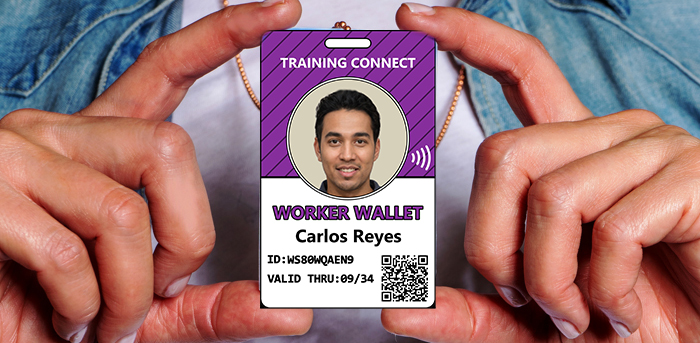
DOB Worker Wallet

NYC contractors who want to work on ground-up construction of 1, 2, or 3 family homes need be a registered General contractor.

NYC DOB-approved course provided began issuing the DOB Worker Wallet card on November 1, 2024.  The Worker Wallet will hold all your certification information in one place. It eliminates the need to carry multiple cards.  All existing qualification cards issued before November 1, 2024, must be replaced by the Worker Wallet card by July 1, 2025. 

Anyone with the following certifications must upgrade to a Worker Wallet card:

  • Mast Climber User/Operator and Refresher
  • Climber/Tower Crane Rigger
  • Rigger Supervisor/Rigger Worker
  • Supported Scaffold User/Installer/Remover
  • Suspended Scaffold User/Supervisor
  • Periodic Gas Piping Inspector

The Worker Wallet is validated on the Training Connect app. The Training Connect app can be downloaded from Google Play or the Apple App store. 

Site Safety professionals can use the Training Connect app. This ensures that all workers on a job site who require the necessary qualification possess valid certifications. 

Please note that the Worker Wallet Card does not replace SST (Site Safety Training) cards.  These cards will remain separate cards for the time being. They will eventually be linked to an individual’s profile in Training Connect.